
PHOREVER Publication: Integration of 3D printed microlenses with vertically stacked photonic integrated circuits for biomedical applications

We are excited to announce a new publication from the PHOREVER Project titled “Integration of 3D printed microlenses with vertically stacked photonic integrated circuits for biomedical applications”, published in the SPIE Digital Library (Conference 13900). 🔗 DOI: http://dx.doi.org/10.1117/12.3078100 The paper is authored by K. Obara, C. Zhong, G. Osnabruggea, M. D. Sousa, T. Berns, N. […]
PHOREVER 8th Plenary Meeting in the Netherlands
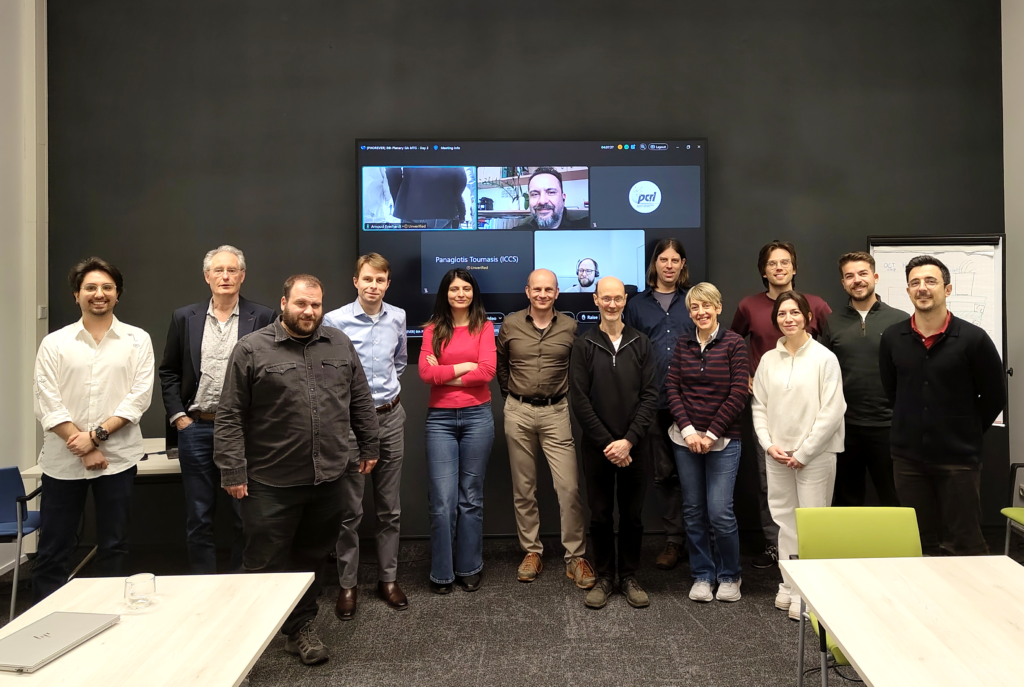
The PHOREVER Project partners met for their 8th Plenary Meeting on 18–19 March 2026 at the premises of LioniX International in the Netherlands. During the meeting, the consortium reviewed the latest progress of the project. Partners shared updates from all work packages and discussed the next steps for the project. The meeting was also a […]
PHOREVER Demonstrates Innovative Photonic Chip for Biomedical Applications
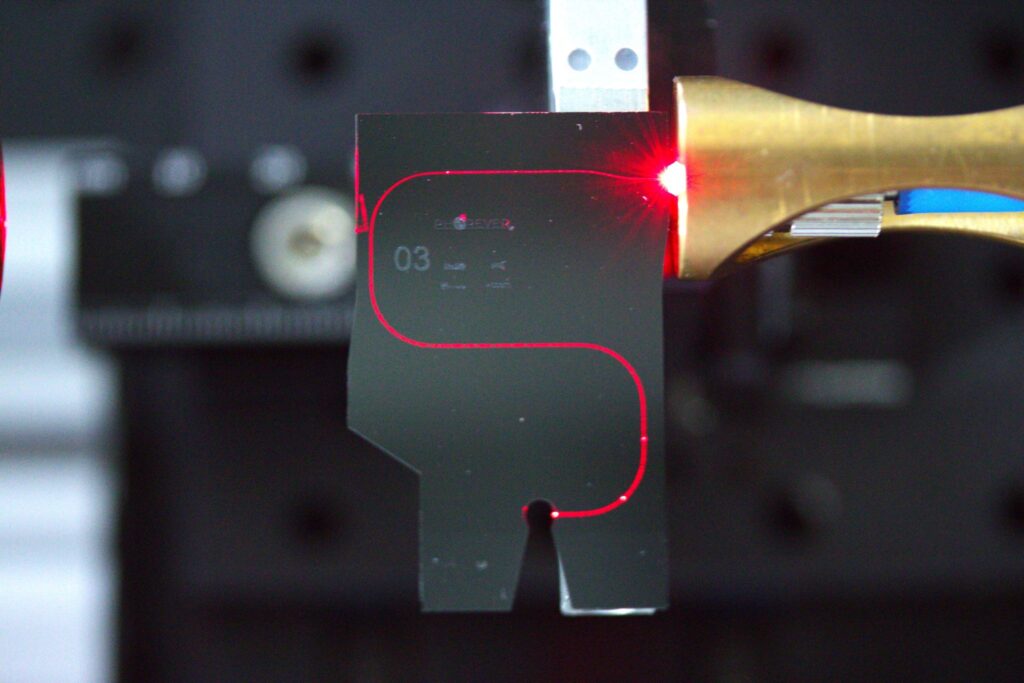
The PHOREVER Project is advancing new photonic technologies for biomedical sensing and diagnostics. Together with project partner Lionix International, the consortium has demonstrated a photonic integrated circuit (PIC) designed for applications such as Optical Coherence Tomography (OCT) and flow cytometry. Instead of using a traditional integrated microfluidic channel, the chip includes a keyhole-shaped opening etched […]
PHOREVER Promotional Video Released
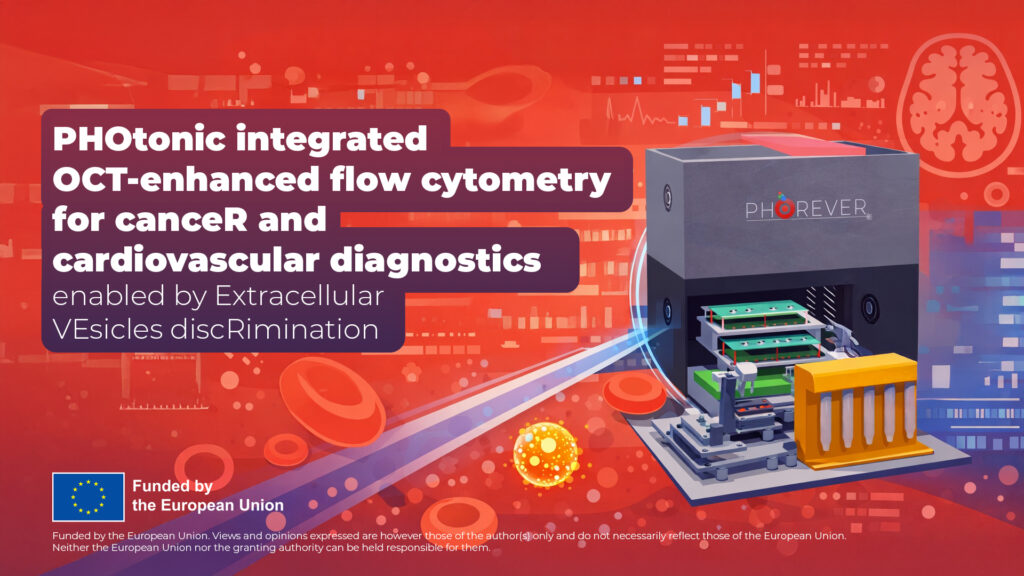
The PHOREVER project has released a new promotional video introducing its goals and technology. PHOREVER is developing a compact platform to detect extracellular vesicles (EVs) for earlier and more accurate disease diagnostics. 👉 Click below to watch the video and learn more:
New PHOREVER Publication Showcases AI-Driven Approach to Distinguishing Stroke from Mimic Conditions

A new PHOREVER publication entitled “A feasible machine learning framework for diagnosing stroke patients versus mimic conditions incorporating extracellular vesicle characterization and EHR features fusion” presents promising results on improving stroke diagnosis through the fusion of extracellular vesicle (EV) analysis and electronic health record (EHR) data using machine learning techniques. The study addresses a critical […]
New PHOREVER Publication on Early Pancreatic Cancer Detection

A new PHOREVER publication presents promising results on supporting early detection of pancreatic cancer using extracellular vesicles (EVs) combined with adaptive machine learning techniques. This work has been accepted at EMBC 2025. The study analyzed EV characteristics together with clinical and laboratory data from patients with Pancreatic Ductal Adenocarcinoma (PDAC) and non-cancer samples. The resulting […]
PHOREVER 2nd Period Review Meeting – Successfully Completed

Yesterday, we successfully held the PHOREVER Project 2nd Period Review Meeting online, bringing together all partners and the European Commission reviewers. It was a great chance to share our progress, talk through challenges and present our next steps for integrating and validating the PHOREVER multi-sensing device. A big thank you to all partners for their […]
3D Microfabrication: Printing Microstructures with Nano-Scale Precision

PHIX recently highlighted its capabilities in 3D microfabrication, a process based on two-photon polymerization (2PP) using the Nanoscribe Quantum X align tool. This technology enables the direct printing of optical and mechanical microstructures onto surfaces such as optical fibers or photonic integrated circuits (PICs). Some of the possible applications include: Arrays of microlenses on PICs […]
Highlights from IEEE EMBC 2025 in Copenhagen

We’re proud to share highlights from Prof. Dimitrios I. Fotiadis’s presentation on: 🔬 “Early Pancreatic Cancer Detection Using Extracellular Vesicles and Adaptive Learning Techniques”. In this study, researchers combined extracellular vesicle (EV) biomarkers with clinical and laboratory data to develop a machine learning–based approach for identifying Pancreatic Ductal Adenocarcinoma (PDAC) at an early stage. The […]
PHOREVER at EMBC | Detecting Pancreatic Cancer with AI and Extracellular Vesicles

The PHOREVER Project will participate in IEEE EMBC 2025, taking place this year in Copenhagen, Denmark, with a presentation by Prof. Dimitrios I. Fotiadis, titled: 🔬 “Early Pancreatic Cancer Detection Using Extracellular Vesicles and Adaptive Learning Techniques” Pancreatic cancer remains one of the most difficult cancers to detect early. This talk explores a novel approach […]